Advice for parents giving driving lessons to their children

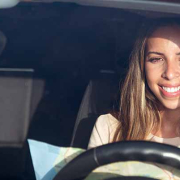
Supporting your child on their driving first driving lessons may be a great experience for both of you, but it can also be a stressful and anxious time.

When driving, keep the following in mind:

  • You are a supervisor, not a passenger. Be vigilant and keep an eye on the learner’s actions. Remain composed and offer constructive criticism.
  • Remember to pause for a conversation, a drink or a snack. It will help to relax both of you. It goes without saying, however, that you should avoid eating and drinking during the driving lesson.
  • Put your phones away.
  • Make sure your insurance covers you before giving any driving lessons
  • Be encouraging

Taking driving lessons from your parents is very helpful practice, but there is not substitute for the input of a professional driving instructor. Driving Lessons Edinburgh has very affordable rates. Call our Edinburgh office today to discuss your first driving lesson!
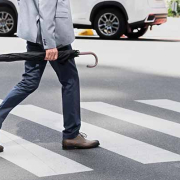
What Kinds of Pedestrian Crossings Are There?

Understanding the different kinds of pedestrian crossings is one of the first things you learn during your first driving lessons.

In addition to being for pedestrian safety, you can encounter them or be questioned about them during your driving test. The purpose of pedestrian crossings is to facilitate safe pedestrian crossings.

The UK government site has a very good guide that people starting to take driving lessons will find very useful:

https://www.gov.uk/government/publications/know-your-traffic-signs/pedestrian-cycle-and-equestrian-crossings

Looking for driving lessons in Edinburgh? Why not give Colin at Driving Lessons Edinburgh a call for a chat and start working towards getting your driving licence today.

Driving lessons in Edinburgh: Stopping Distances

One of the first thing that we teach here at Driving Lessons Edinburgh is to understand and respoce stopping distances.

To pass both your driving test and your driving theory test, you must be aware of stopping distances.

The quicker you drive and the wetter the road, the greater the stopping distance. Additionally, it takes some time to comprehend the situation before braking.

You can pass your driving test and stay safe on the roads long after by calculating stopping distances – so it is vital to learn how to calculate them as soon as you start taking driving lessons.

Starting with 20mph, multiply the speed intervals by 2 to give the safe stopping distance in feet. For each additional 10mph, increase the multiplication by 0.5 to provide the appropriate stopping distance:

• 20 mph x 2 = 40 feet (12 metres)
• 30 mph x 2.5 = 75 feet (23 metres)
• 40 mph x 3 = 118 feet (36 metres)
• 50 mph x 3.5 = 175 feet (53 metres)
• 60 mph x 4 = 240 feet (73 metres)
• 70 mph x 4.5 = 315 feet (96 metres)

Expect to learn more during your first driving lesson with Driving Lessons Edinburgh!

A Guide for Beginners: Driving an Automatic Vehicle

Because automatic cars are simpler to operate than manual ones, learning to drive one can be beneficial for people starting their driving lessons.

Beginners may concentrate better on steering, road awareness and making safe decisions in an automated car since there is no clutch pedal or need to shift gears, distracting them from the rest. This helps can boost the confidence of people who just started taking driving lessons, especially when they start to drive in Edinburgh’s busiest roads.

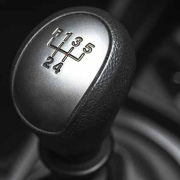
Having said that, here at Driving  Lessons Edinburgh use a car with manual gears, as we feel this is the best for learning and preparing you for your driving test.

Call  Colin at Driving  Lessons Edinburgh and book your first driving lesson today!

Are Learners Allowed to Drive on the Motorway?

Indeed, students are allowed to drive on the highway. However they can do so only n a dual-controlled vehicle with a DVSA-approved instructor starting on June 4, 2018. If they are in a dual-controlled car with a driving instructor who has been authorized by the DVSA, learner drivers are permitted to drive on motorways with a provisional license.

Therefore Driving Lessons Edinburgh can confirm that, in short, students are allowed to drive in the motorway, but only during their driving lessons with their driving instructor.

For affordable driving lessons in Edinburgh, contact us today.

Manual vs automatic

When considering getting your driving licence, and starting to take your driving lessons, do you envisage using a manual or automatic vehicle?

Manual transmission is the most popular option in the UK. Only about 40,000 of the 720,000 driving exams that students in the UK take are taken using automatic cars. Despite this, data from 2012 to 2017 shows that the nation’s sales of automated vehicles appear to have increased.

Let’s weigh the benefits and drawbacks of manual transmission.

Pros:

– Manual cars are generally less expensive than automatic ones.
– You can drive both manual and automatic vehicles after passing your manual driving test.
– You have total control over engine speed while using manual gear shifts.

Cons:

– might get tiring when stuck in city traffic. if you have a stop-start commute every day.
– some people with knee conditions find it problematic

But what are the advantages of driving an automatic car?

– Automatics, in general are far easier to drive.
– It’s important to remember that automatic vehicles can be much better for those with any limited mobility or disability as they are easier to control and easier to learn in.
– Drivers have less to worry about, thinking of what to do with the feet and hands, which allows them to concentrate on the road instead.

If you call Driving Lessons Edinburgh for a chat, we can surely expland on the above and answer any questions you may have.

How long does it take to learn how to drive?

How much time does it take to become a driver? Learning to drive is a lifelong skill that should not be hurriedly acquired.

This could be a rather rapid process because some people take intense driving lessons. However, you may not be able to take driving lessons on a regular basis due to work and other obligations. And this can slow things down quite a bit.

Being consistent is essential, and you will learn to drive more quickly if you practice with your driving instructor as much as you can. You can also practice driving with friends or family. Naturally, the availability of driving tests may not coincide with your ideal timetable, so you will need to continue honing your driving techniques until a test that is appropriately scheduled becomes available.

But there are other things to think about. Statistics show that you will learn those critical driving abilities faster if you are younger. Also if you already are familiar with the highway code before you start taking driving lessons, this will make things much faster.

Call Driving Lessons Edinburgh for a chat, and we will be able to discuss your specific requirements and advice on the best schedule for your driving lessons.

What do you need to bring to your first Driving Lesson?

What do you need to bring to your first driving lesson?

The answer is not very much….

1. Provisional licence – the most important thing is to remember to bring your provisional licence (if you haven’t got one see our blog on how to apply for your Provisional Driving Licence). You instructor must see this before he/she is allowed to give you any lessons.

2. Glasses/contact lenses – if you need them, please remember to bring them. Your instructor will ask you to read a number plate from:-

• 20 metres for cars with the new-style number plates (2 letters followed by 2 Numbers KP34 CCA; or
• 20.5 metres for the old style number plates.

If you are unable to read the number plate unfortunately, your instructor wont be able to take you out unless you are able to collect your glasses before the lesson starts. If you were unable to read a number plate on the day of the test, the examiner wouldn’t be able to continue any further with the Driving Test.

3. Shoes – it may sound silly but please wear comfortable shoes (trainers or flat shoes are best)